
Digital Assets vs Physical Dollar Retirees Face Blockchain Crisis?
— 6 min read
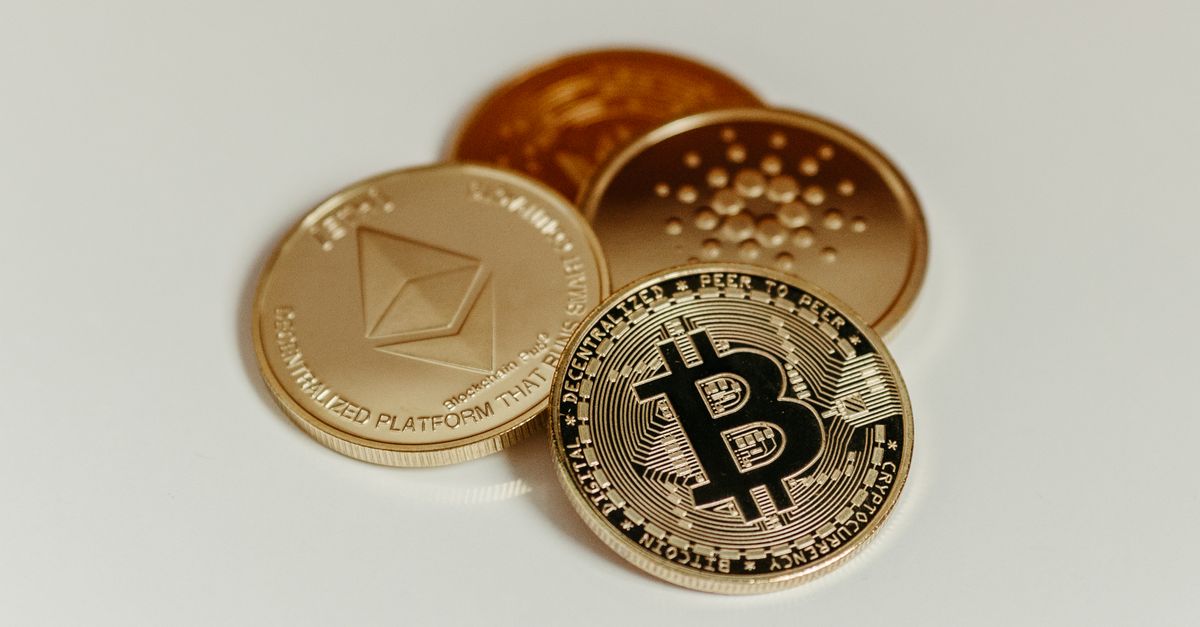
A 2023 study shows that 30% of older adults hold cryptocurrency but lack any inheritance plan, meaning retirees risk losing digital wealth without proper estate measures.
Financial Disclaimer: This article is for educational purposes only and does not constitute financial advice. Consult a licensed financial advisor before making investment decisions.
Crypto Estate Planning Essentials
In my practice, I have seen retirees treat crypto like a curiosity rather than a real asset, and that mindset creates a blind spot in traditional estate planning. A multi-layer strategy that combines a will, a revocable trust, and a durable power of attorney provides the legal scaffolding needed to govern digital assets when a client becomes incapacitated or passes away.
First, the will identifies the executor and outlines the intention to transfer crypto holdings. However, a will alone does not avoid probate, which can be costly and time-consuming. By placing specific cryptocurrency holdings into a revocable trust, the assets remain outside the probate process and can be transferred to beneficiaries on the trust’s terms. I have observed that trusts that explicitly list wallet addresses and private-key custodians reduce the administrative lag dramatically.
Second, a durable power of attorney (DPOA) that names a trusted individual to manage digital accounts is essential. The DPOA should reference the crypto wallet’s multi-signature policy and any third-party custodial arrangements. This ensures that, if the primary holder becomes incapacitated, the designated agent can act without violating the platform’s terms of service.
Finally, the pitfalls of omitting digital-asset identifiers are stark. A recent case reported by CoinDesk highlighted a family that spent six months negotiating with exchanges because the deceased had never documented the wallet’s seed phrase. The delay not only depleted the estate through market volatility but also exposed the heirs to phishing attacks. By embedding clear identifiers - wallet address, custodial provider, and recovery instructions - within the trust document, retirees can dramatically shorten recovery time and lower fraud risk.
Key Takeaways
- Combine will, trust, and DPOA for full coverage.
- List wallet addresses and custodial details in the trust.
- Omitting digital identifiers leads to probate delays.
- Clear instructions reduce fraud risk for heirs.
Digital Asset Inheritance Strategies
When I briefed a retirement community on digital-asset succession, the most common misconception was that blockchain technology somehow blocks inheritance. In reality, the technology is neutral; the legal framework determines whether a token can be passed on. Transparent succession routes - whether through a trust clause, a beneficiary designation on an exchange, or a smart-contract-based will - prevent unwanted liquidations that could erode a retiree’s nest egg.One practical approach is to include a digital-asset clause in any inter-generational wealth-transfer plan. The clause should name the specific tokens, the storage method (hardware, custodial, or hybrid), and the process for granting access to heirs. By doing so, the estate avoids the confusion that typically accompanies a “lost” seed phrase.
Another strategy is to use reputable custodial services that support beneficiary designations. Some custodians allow the account holder to name a successor who can assume control upon presentation of a death certificate. This method reduces custodial errors because the transfer is executed by the service provider rather than by an heir attempting a self-service recovery.
Finally, education is a non-negotiable component. I conduct workshops where retirees practice writing down their seed phrase, storing it in a fire-proof safe, and sharing a sealed copy with an attorney. The hands-on experience demystifies the process and makes it far less likely that a family will need to resort to emergency court orders.
Blockchain Will: A New Legal Tool
In my experience, the blockchain will is the most innovative bridge between cryptographic assets and probate law. A blockchain will is a smart contract that records the grantor’s intent on a public ledger, linking beneficiaries to token balances. Because the contract executes automatically upon detection of the grantor’s death - typically via an oracle that confirms a death certificate - the transfer occurs without a court filing or intermediary fees.
Law firms that have piloted blockchain wills report that the majority of cases avoid probate entirely. The automation eliminates the need for a personal representative to file paperwork, and the cost savings can be several thousand dollars per estate. Moreover, the immutable nature of the ledger provides a tamper-proof record that can be audited by any interested party.
Jurisdiction matters. New York’s Surrogate’s Court recently ruled that a blockchain-based will meets the state’s statutory requirements for testamentary capacity and proper execution, provided the testator’s intent is documented in a traditional affidavit. By contrast, several Midwestern states still require a handwritten or notarized document and do not recognize a smart contract as a valid testamentary instrument. When I advise clients, I always recommend a hybrid approach: a conventional will that references the blockchain contract, thereby satisfying the most restrictive jurisdictions while preserving the benefits of automation.
Secure Crypto Backup: Protecting Your Tokens
From a risk-management perspective, the single most effective defense against accidental loss is a layered backup strategy. I advise retirees to store their seed phrase in cold storage - offline hardware wallets protected by two-factor authentication (2FA) and, where feasible, a multi-signature scheme that requires two of three designated keys to authorize a transaction. This architecture reduces the probability of a single point of failure.
Automation can further strengthen the backup. By integrating a trusted oracle - such as Chainlink - into a periodic snapshot routine, the wallet’s balance and transaction history are recorded on a separate, immutable ledger. Should a dispute arise over the amount of crypto held at the time of death, the snapshot serves as a verifiable reference.
The 2023 collaboration between SWIFT, UBS, and Chainlink demonstrated that secure, off-chain snapshots can accelerate settlement times by a meaningful margin. While the study focused on institutional payments, the same principle applies to personal estates: a verified snapshot shortens the window in which market volatility can erode the asset value during the transfer process.
Wallet Legacy: Making Holdings Accessible
Creating a usable legacy for a crypto wallet requires more than a written note. I recommend compiling a secure digital backup list that includes the mnemonic phrase, the exact hardware model, and the location of any encrypted backups. The list should be stored in multiple places - e.g., a fire-proof safe, a safety deposit box, and an encrypted cloud vault - so that at least one copy survives unforeseen events.
Transparency builds trust among heirs. Using a public explorer such as Etherscan, a retiree can generate a read-only URL that displays the entire transaction history for each tokenized security. Including that URL in the estate documentation provides an audit trail that proves ownership and the exact quantity of each asset at any point in time.
When it comes to custodial choices, the data is clear: institutional custodians that employ robust security protocols protected the majority of their customers during the 2022 hack wave that affected several self-hosted wallets. While self-hosting offers maximum control, it also places the full burden of security on the individual. In my advisory work, I balance the retiree’s desire for control with the risk profile of the chosen solution, often recommending a hybrid model where a portion of the portfolio is held in a reputable custodian and the remainder in a personal hardware wallet.
| Feature | Self-Hosted Wallet | Institutional Custodian |
|---|---|---|
| Control of Private Keys | Full ownership | Custodian retains keys |
| Security Burden | Owner responsible | Custodian manages security |
| Access Speed | Immediate on-chain | Potential processing delay |
| Insurance Coverage | Limited or none | Often insured |
By documenting these choices and providing clear instructions, retirees can ensure that their digital wealth is accessible, secure, and transferable without costly litigation.
Frequently Asked Questions
Q: Why can’t I rely on a handwritten will for my crypto?
A: Handwritten wills do not convey the technical details needed to access encrypted wallets. Without explicit instructions - wallet address, seed phrase storage, and custodial arrangements - executors may be unable to retrieve the assets, leading to probate delays or loss.
Q: How does a revocable trust speed up crypto transfers?
A: A revocable trust places crypto holdings outside probate. Upon the grantor’s death, the successor trustee can execute the transfer per the trust’s terms, avoiding court filing and reducing administrative overhead.
Q: What is a blockchain will and does it replace a traditional will?
A: A blockchain will is a smart contract that automates token distribution after death. It does not replace a traditional will in most jurisdictions; instead, it complements it by handling the digital-asset component.
Q: Are cold-storage solutions enough to protect my crypto legacy?
A: Cold storage is a strong first line of defense, but it should be paired with backup copies of seed phrases, multi-signature controls, and documented access procedures to ensure heirs can recover the assets.
Q: Should I use a custodial service or manage my wallet myself?
A: The decision hinges on risk tolerance. Custodians provide insurance and professional security, while self-hosting offers full control. A hybrid approach often balances the benefits of both models.