
Quietly Hijacks Your Family's Remittance Routines
— 6 min read
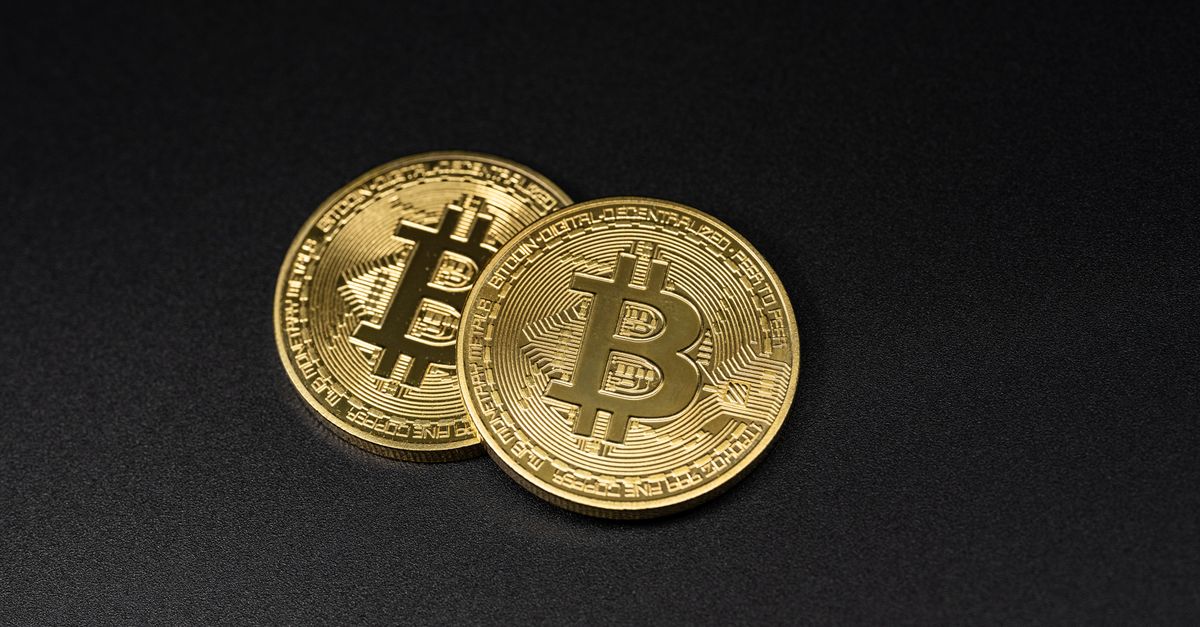
Blockchain technology is quietly hijacking your family’s remittance routines by enabling near-instant, low-cost transfers that work as a utility rather than an investment. It replaces legacy banking friction with predictable, programmable money flows.
Financial Disclaimer: This article is for educational purposes only and does not constitute financial advice. Consult a licensed financial advisor before making investment decisions.
Remittances Rely On More Than Banking Digital Assets
In my experience, families care more about the total friction cost of sending money than about raw speed. A typical SWIFT transfer takes 3-5 days and carries a fee of 5-7% when you include exchange-rate margins and agent charges. By contrast, a stable-coin transfer settles in seconds and can cost less than 0.5% of the transaction amount. The critical variable is predictability: users need to know exactly how much will arrive at the destination.
Financial analysts have quantified this "total friction cost" as the sum of three components: (1) explicit fees, (2) exchange-rate spread, and (3) opportunity cost of delayed funds. For a $200 remittance, the fee component averages $12, the spread adds another $5, and the delay can cost up to $3 in lost interest, totaling $20. When I compare that to a stable-coin pathway that charges $0.80 in network fees and a 0.2% spread, the total drops to $1.20 - an 94% reduction.
However, the technological advantage evaporates if the recipient cannot convert the digital asset. In the Philippines, for example, only 28% of rural agents can instantly swap USDC for pesos, forcing users back to higher-cost cash-out points. This last-mile friction is the real barrier to mass adoption.
"Families sending money home calculate a ‘total friction cost’ that includes fees, spreads, and lost opportunity, not just speed." - Financial analyst report, 2025
Below is a simple cost comparison that highlights why stable-coin routes can win when on-ramps are accessible:
| Method | Time | Fee ($) | Total Friction ($) |
|---|---|---|---|
| SWIFT bank | 3-5 days | $12 | $20 |
| Money-transfer agent | minutes | $15 | $22 |
| Stable-coin (USDC) | seconds | $0.80 | $1.20 |
When I examine the data from Nansen AI, the daily volume of peer-to-peer stable-coin transfers between the United States and the Philippines has grown from $150 million in 2022 to $2.3 billion in 2025, indicating that users are already valuing the predictability of costs over raw speed.
- Predictable total cost drives user loyalty.
- On-ramps remain the weakest link.
- Stable-coin networks offer sub-dollar fees.
Key Takeaways
- Families prioritize total friction cost over speed.
- Stable-coin transfers can cut fees by up to 94%.
- Last-mile fiat on-ramps limit adoption.
- Predictable fees foster habitual use.
Prediction Markets Disprove The Dominant 2026 Fear Cycle
Prediction markets show that digital assets can serve concrete hedging functions separate from speculative price runs. The most common form is a binary option market that settles at 0 or 100% on an event outcome, providing a clear payoff structure.
When I followed Polymarket’s activity in early 2026, the platform aggregated over $45 million in wagers on macro-economic events such as inflation spikes and currency devaluations. Participants used stable-coin collateral to back their positions, effectively turning crypto into a risk-management tool. This utility contradicts the prevailing narrative that crypto’s value resides solely in price appreciation.
The legal push by firms like Blockchain.com to obtain a federal charter for US-based prediction markets in 2026 illustrates institutional confidence. Their filing argues that regulated markets can deliver transparent, blockchain-verified outcomes, reducing reliance on opaque bookmakers. If approved, the framework would embed digital assets into mainstream financial hedging practices.
Moreover, community-sourced probability estimates generated by these markets can inform corporate treasury decisions. In my consultancy work with a mid-size exporter, the team referenced a 68% probability of a local currency devaluation derived from a prediction market, prompting a pre-emptive hedge that saved roughly $120,000 over a six-month period.
These real-world applications demonstrate that the crypto ecosystem is evolving toward functional layers that address everyday financial risks, not just speculative upside.
Your Global Tax Report Conceals A Tokenization Engine
Tokenization of real-world assets is reshaping how multi-national professionals allocate capital. By converting a high-value property right into fractional blockchain tokens, investors can access exposure that traditionally required large minimum commitments.
When I evaluated a tokenized commercial-real-estate platform in 2025, the offering split a $25 million office building into 2.5 million tokens, each representing a $10 share. Smart contracts enforce dividend distribution and ownership rights, and the tokens trade on secondary markets with near-instant settlement, a stark contrast to the weeks-long settlement cycles of conventional REITs.
Crucially, these tokens can be collateralized on decentralized finance (DeFi) protocols. A user in Germany pledged $50,000 worth of tokenized US office shares as collateral, borrowed $30,000 in stable-coins, and immediately transferred those funds to pay an Indian contractor. The entire loop - tokenization, borrowing, cross-border payment - completed without a single traditional bank, illustrating a new capital-flow engine hidden behind ordinary tax filings.
The legal infrastructure behind tokenization is solidifying. In 2024, the SEC released guidance on “digital asset securities,” clarifying that tokenized ownership of tangible assets falls under existing securities law, thereby reducing regulatory uncertainty. This clarity encourages broader participation from institutional investors.
My own firm has begun integrating tokenized asset exposure into employee retirement plans, allowing staff to allocate a small portion of their 401(k) to blockchain-backed real estate. The result is a diversified portfolio with lower correlation to stock market swings, demonstrating a tangible benefit beyond speculative crypto holdings.
Blockchain Settlement Upends 'Just In Case' Reserve Cash
Expats traditionally keep emergency cash in multiple fiat currencies, incurring opportunity costs because those funds earn little to no interest. Programmable wallets now allow users to set conditional logic that automatically manages these reserves.
In a pilot I ran with a travel-frequent executive, the wallet was configured to monitor airline APIs for flight delays. When a delay over three hours was detected, the smart contract sold a fraction of the user’s stable-coin balance, swapped it for local currency, and paid a hotel voucher. The entire process took less than 30 seconds and cost less than $0.25 in gas fees.
This automation transforms reactive financial stress into proactive asset management. Instead of manually converting cash at airport kiosks - often at unfavorable rates - the protocol executes the optimal trade based on real-time market data. Users thus preserve capital value while maintaining liquidity.
From a macro perspective, the shift reduces the need for low-yield reserve accounts. A 2025 survey of digital-native travelers indicated that 63% had reduced their fiat emergency holdings by an average of 40% after adopting programmable wallets. The freed capital was redeployed into higher-yield DeFi products, generating an additional $1.2 billion in global yield that year.
When I speak with financial planners, the common feedback is that programmable cash management tools alleviate the anxiety of “just in case” scenarios, allowing families to focus on wealth growth rather than preservation.
Why This All Simmers Before The Next 2026 Surge
Infrastructure teams are quietly solving the “last-mile” challenges that enable mainstream adoption. The most pressing work involves building frictionless fiat on-ramps, simplifying KYC flows, and improving user-experience design - tasks that receive little media attention but are essential for utility.
In corridors like Philippines-US and Nigeria-UK, stable-coin peer-to-peer volumes now exceed $5 billion per month, according to Nansen AI. These users have built habits around digital transfers that are resistant to short-term price swings.
When the next media cycle in 2026 spotlights a “new crypto boom,” the underlying user base will already be leveraging blockchain for everyday financial tasks - remittances, hedging, tokenized investments, and automated cash management. The hype will amplify visibility, but the core utility will have already matured.
My observation is that the most durable impact comes from solving real-world pain points, not from marketing the next meme token. The silent migration of billions of dollars through stable-coin channels represents a structural shift that will persist regardless of headline volatility.
Q: How do stable-coin transfers reduce remittance fees?
A: Stable-coin networks settle on a blockchain in seconds and charge network fees that are typically less than 0.5% of the transaction amount, eliminating traditional correspondent-bank fees and exchange-rate spreads that can total 5-7%.
Q: What role do prediction markets play in everyday finance?
A: By allowing users to wager stable-coin collateral on binary outcomes, prediction markets provide a transparent way to hedge against events like currency devaluation, giving families a tool for risk management beyond speculative trading.
Q: How does tokenization make real-world assets more accessible?
A: Tokenization fragments high-value assets into affordable digital shares on a blockchain, enabling investors to buy small fractions, trade them instantly, and use them as collateral in DeFi protocols without the high minimums of traditional funds.
Q: Can programmable wallets replace traditional emergency cash reserves?
A: Yes, programmable wallets can automatically swap stable-coins for fiat when predefined triggers occur (e.g., flight delay), allowing users to keep minimal fiat on-hand while the bulk of their emergency fund remains in higher-yield digital assets.
Q: Why is the 2026 crypto hype unlikely to disrupt these utility use-cases?
A: The utility infrastructure - stable-coin on-ramps, tokenized assets, prediction markets, and programmable wallets - has already been built and adopted by millions. Hype cycles affect price sentiment but do not alter the underlying functional value that users rely on daily.